The Future of Finance: 5 Transformative Impacts of AI on Stock Market Trading in 2026

Introduction to the AI-Driven Financial Landscape of 2026
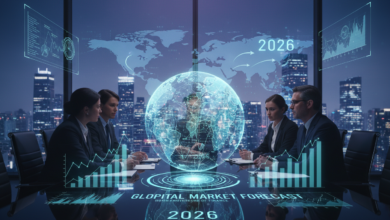
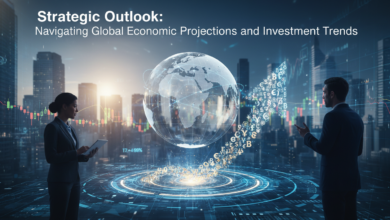
The global financial markets have always been a battleground of data and speed. As we approach 2026, Artificial Intelligence (AI) has shifted from being a specialized tool for institutional giants to the foundational architecture of global trading. This transition is not merely incremental; it represents a paradigm shift in how liquidity is provided, how assets are valued, and how risk is mitigated across the globe.
[IMAGE_PROMPT: A professional and futuristic trading floor in 2026, featuring sleek glass surfaces, holographic data visualizations of global stock movements, and financial professionals using high-tech transparent displays in a minimalist office setting.]
1. Hyper-Advanced Predictive Analytics and Forecasting
By 2026, predictive modeling has reached unprecedented levels of accuracy. Traditional statistical models have been superseded by deep learning neural networks capable of processing multi-modal data streams simultaneously. These systems do not just analyze historical price action; they incorporate real-time climate data, geopolitical shifts, and micro-economic indicators to forecast market movements with surgical precision. This allows institutional investors to anticipate volatility before it manifests in the public order books.
2. The Autonomy of High-Frequency Trading (HFT)
The speed of execution in 2026 is measured in nanoseconds, driven by AI algorithms that possess the ability to self-correct and learn from market friction without human intervention. This autonomous nature reduces the latency between signal generation and order execution. These AI-driven HFT systems are now essential for providing market liquidity, though they require sophisticated oversight to prevent the type of systemic shocks seen in previous decades.
3. Democratization Through Personal AI Robo-Advisors
One of the most significant shifts by 2026 is the democratization of sophisticated trading tools. Retail investors now have access to AI-powered robo-advisors that offer institutional-grade portfolio management. These platforms use machine learning to personalize investment strategies based on an individual’s risk profile, life goals, and real-time market conditions, effectively narrowing the gap between individual traders and massive hedge funds.
[IMAGE_PROMPT: A close-up shot of a smartphone screen showing a sophisticated AI financial advisor app with clean UI, displaying a diversified portfolio and automated trading insights, held by a professional in a modern urban environment.]
4. NLP and Alternative Data Integration
In 2026, Natural Language Processing (NLP) has evolved to understand the nuance of global sentiment perfectly. AI systems monitor millions of sources—from social media and news wires to satellite imagery and supply chain logs—to identify alternative data trends. By synthesizing this information, AI can predict corporate earnings and consumer behavior patterns weeks before official reports are released, providing a substantial competitive edge to those utilizing these technologies.
5. Enhanced Regulatory Compliance and Algorithmic Auditing
As AI becomes the primary driver of market activity, regulatory bodies have introduced sophisticated AI systems of their own to monitor for anomalies. In 2026, RegTech (Regulatory Technology) uses AI to detect market manipulation, wash trading, and insider activity in real-time. This ensures that while the markets move faster than ever, they remain transparent and fair, as the AI acts as both the engine of growth and the digital guardian of market integrity.
Conclusion
The year 2026 marks a milestone where human intuition and machine intelligence converge to create a more efficient financial ecosystem. While the reliance on AI introduces new challenges regarding algorithmic bias and systemic interconnectedness, the benefits of enhanced liquidity and precision are undeniable. Navigating the stock market in 2026 requires a deep integration of these technologies to remain competitive in an increasingly automated world.